
Let's be honest, car sales leads are just people—potential customers who've raised their hand, showing they’re interested in a car on your lot. The real game isn't just about getting a flood of names and numbers. It's about building a smart, automated system that attracts genuinely qualified buyers and makes it ridiculously easy for them to connect with you. Think of your website as your dealership's 24/7 sales engine.
Turn Your Website Into a High-Converting Digital Showroom
Your website is your single most important salesperson. It works tirelessly, day and night, to grab a buyer's attention and turn that initial click into a solid lead. In an era where almost every car buying journey starts on Google, your site can't just be a static digital brochure. It has to be a well-oiled machine, engineered from the ground up to attract, engage, and convert.
This is what that machine looks like in its simplest form.
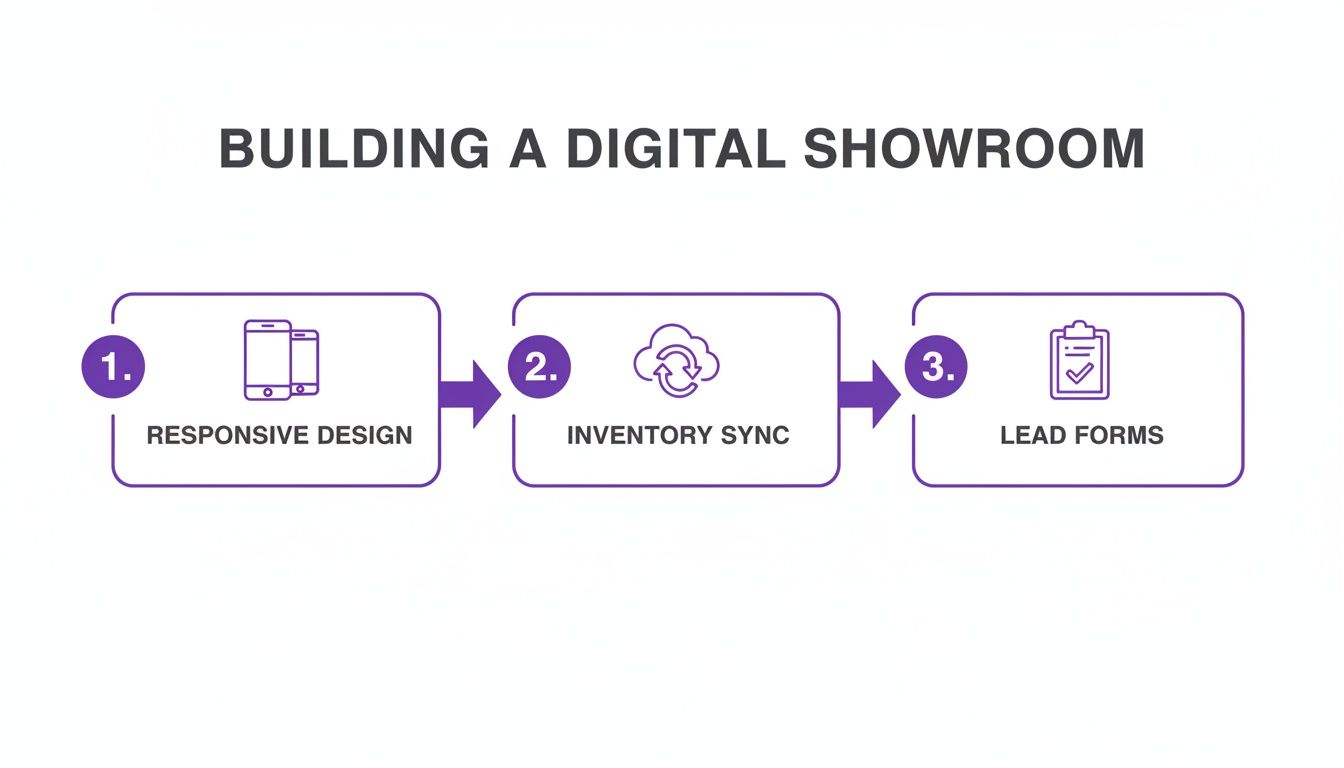
It all boils down to three things: a flawless mobile experience, live inventory updates, and smart lead forms that capture interest at the right moment.
It All Starts with a Mobile-First Foundation
Most of your customers are scrolling through your inventory on their phones, often while standing in line for coffee or sitting on their couch. A clunky, slow-loading mobile site is the fastest way to lose them forever. Chasing high PageSpeed scores isn't just for the tech nerds; it's a business decision that directly impacts your bottom line. An impatient buyer won't wait for your site to load—they'll just leave.
If you want to dive deeper into what makes a great site, we've covered it all in our guide on modern dealership website design.
The market is heating up. S&P Global is forecasting 91.7 million light-vehicle sales for 2025, which will blow past pre-pandemic numbers. With the majority of auto buyers starting their hunt online, you have to be ready. A site that’s built for performance can significantly boost your inquiries, helping you grab your piece of that growing pie.
The biggest wins come from making it incredibly simple for a buyer to express interest the moment they find a car they love. Your website should remove friction, not create it.
Automate Your Inventory and Never Miss an Opportunity
Stop wasting time manually updating your online inventory. It's a recipe for mistakes and missed sales. Setting up automatic inventory syncing is a game-changer. It ensures that the moment you add a car to your management system, it’s live on your website—accurate and ready to sell. This saves you countless hours and prevents that dreaded "Sorry, that one just sold" conversation.
Finally, place simple, clear lead capture forms on every single vehicle detail page (VDP). Don't force a potential buyer to go searching for a "Contact Us" page. Put buttons like "Check Availability" or "Schedule Test Drive" right there, next to the photos of the car they're looking at. For those looking to get even more proactive, exploring some chatbot lead generation tactics can be a great way to engage visitors and turn casual browsers into qualified prospects.
To pull this all together, here's a quick checklist of the must-have features your website needs to become a lead-generating powerhouse.
Key Website Features for Generating Leads
| Feature | Why It Drives Leads | AutoFire Solution |
|---|---|---|
| Responsive, Mobile-First Design | Ensures a perfect browsing experience on any device, especially smartphones where most car shoppers start their search. | All AutoFire websites are built with a mobile-first philosophy, ensuring fast load times and a seamless user experience. |
| Automatic Inventory Sync | Keeps your online listings 100% accurate without manual work, building trust and preventing customer frustration. | Our platform syncs directly with your DMS, pushing real-time inventory updates to your site, Google, and Facebook. |
| High-Quality VDPs | Detailed Vehicle Detail Pages with large photos, videos, and key specs keep buyers engaged and on your site longer. | We create compelling VDPs with unlimited photos, video integration, and clear feature lists to showcase every vehicle. |
| Strategic Lead Forms & CTAs | Simple forms placed on every VDP make it easy for shoppers to take the next step the moment they're interested. | Customizable lead forms ("Check Availability," "Get ePrice") are placed strategically to maximize conversion opportunities. |
| Online Credit Application | Lets serious buyers start the financing process immediately, qualifying them and moving them down the funnel. | Our secure, built-in credit applications help you capture high-intent leads and streamline the F&I process. |
| Trade-In Valuation Tool | Engages potential sellers and provides a valuable lead by capturing details about their current vehicle. | Integrated trade-in forms powered by trusted valuation sources give you a steady stream of local inventory leads. |
Making sure these components are in place and working together is the first, most crucial step in building a predictable pipeline of car sales leads from your own website.
Own Your Backyard: How to Dominate Local Search and Attract Buyers
If you want a steady flow of high-quality car sales leads, you absolutely have to be visible the moment a local shopper starts looking for a car you have on your lot. This isn't about blanketing the internet with ads; it’s about being in the right place at the right time. That place is local search.
When someone down the street pulls out their phone and searches "used Ford F-150 near me," you need your dealership to pop up first. This kind of traffic is pure gold. These aren't just tire-kickers; they have intent and are often ready to make a move. The entire game hinges on mastering your presence on Google.
Your Google Business Profile: The New Front Door
Forget your physical storefront for a second. Your Google Business Profile (GBP) is the real front door to your dealership today. It’s the first impression you make on nearly every local customer, so it needs to be sharp. Just claiming it is the bare minimum. You need to treat it like an active, information-rich hub for your business.
First things first, get the basics right. Your address, phone number, and hours must be 100% accurate. Nothing kills a lead faster than sending them to the wrong address. Next, load it up with high-quality photos. Go beyond a simple picture of the building—show off your best inventory, your friendly sales team, and even your clean service area. These visuals give people a feel for your dealership and start building trust before they even visit.
Think of it this way: A complete and active Google Business Profile is the single most powerful free marketing tool you have for generating local leads. It’s what gets you on the map—literally—and connects you with shoppers who are ready to buy now.
Finally, you need a game plan for customer reviews. They are a massive factor in how Google ranks you and are the ultimate social proof. Make it easy for happy customers to leave you a review, and be sure to respond to all of them, good and bad. It shows Google (and future buyers) that you’re engaged and stand behind your business. For a deep dive, our complete guide to local SEO for car dealerships has more advanced tactics you can put to work.
Put Your Actual Cars Directly on Google
A well-oiled GBP is crucial, but the real magic happens with Google Vehicle Listings. This is where you can push your live inventory feed directly into Google's search results.
Imagine a potential buyer searching for a specific car. Instead of just seeing your dealership's name, Google shows them the exact 2019 Toyota Camry on your lot—complete with photos, your listed price, and the mileage. This is a game-changer.
- Unbeatable Visibility: It puts your specific cars in front of motivated buyers, leapfrogging competitors who are still relying on just their website.
- Highly Qualified Clicks: The people clicking these listings aren't just browsing; they are interested in that specific car. The lead quality is off the charts.
- Instant Credibility: Having your inventory listed officially on Google lends a huge amount of trust to your dealership.
The key is making sure your inventory management system or website provider can generate and send a compatible feed to Google. When you get this set up, you start turning casual searchers into motivated shoppers looking at your VDPs, which is how you generate some of the best car sales leads possible.
Expand Your Reach with Smart Acquisition Channels
While a solid SEO foundation is your long game, you can’t just wait for customers to find you. You need a mix of marketing channels working together to bring in a steady flow of car sales leads right now. Putting all your eggs in one basket is a recipe for disaster. A smart, multi-channel system means you're always connecting with potential buyers, no matter where they're looking.
The trick is to go where the buyers already are. For used cars, that’s social media and the big online marketplaces. These are goldmines for independent dealers because you can run highly targeted, budget-friendly campaigns that put your best metal in front of local shoppers who are ready to buy.
Dominate Social Media Advertising
For dealers, Facebook and Instagram are still absolute powerhouses. The real magic isn't just posting pictures of your cars; it's the incredibly detailed targeting. Imagine showcasing that F-150 you just got in directly to people in your zip code who have been browsing truck forums or visiting competitor sites. That's the level of precision we're talking about.
This goes way beyond just "boosting" a post. A real social ad strategy that moves cars involves:
- Dynamic Inventory Ads: These are brilliant. They automatically show cars from your live inventory feed to people who have already visited your website. It’s like a personalized, digital follow-up.
- Lead Generation Forms: Use Meta’s built-in lead forms. A potential buyer can show interest and send you their info without ever leaving Facebook or Instagram. This simple step can dramatically increase how many leads you get.
- Video Walkarounds: Forget slick, overly-produced ads. A quick, authentic video walkaround of a hot car on your lot grabs attention and builds trust way faster than a static photo ever could.
These platforms are visual. They’re perfect for showing off what you do best—selling great cars. If you feel like your marketing could use a shot in the arm, check out our guide on modern car dealership marketing strategies for more proven ideas.
Tap Into High-Intent Marketplaces
Let's not forget the old standbys. Platforms like Facebook Marketplace and Craigslist are still the first stop for a huge chunk of used car shoppers. Listing your inventory here puts you directly in the path of people who are actively hunting for their next vehicle.
The name of the game on these sites is standing out and being lightning-fast. Your listings need high-quality photos (from every angle!) and detailed, honest descriptions. When an inquiry hits your inbox, you need to be on it immediately. Seriously. The first dealer to respond often gets the appointment. It’s a hands-on approach, but it builds momentum and shows customers you're serious. To make sure your team is chasing the right opportunities, it's worth brushing up on these 10 essential sales prospecting best practices.
Looking at the bigger picture, the demand is definitely there. From January to November 2025, global new vehicle sales hit 14.8 million units—a 2.4% jump from the previous year. What's really interesting is the 5.1% surge in light trucks like SUVs and pickups. This trend is a massive opportunity for dealers who stock the right inventory and have a smart plan to reach these buyers. You can find more insights about the 2025 global car market trends at accio.com.
Convert More Visitors with Engaging Onsite Tools
Getting a shopper to your website is a huge win, but let’s be honest, it’s only half the battle. Now, you’ve got to convince them to actually talk to you. The trick is to turn your website from a passive digital brochure into an active tool that makes it incredibly easy for visitors to raise their hand and become a real car sales lead.
This all comes down to the user experience (UX). You need to remove friction and add genuine value. When a shopper feels like your website is actually helping them make a smart decision, they're far more likely to hand over their contact info.
Make Lead Forms Effortless
The single biggest mistake I see dealerships make is creating long, complicated lead forms. Think about it: modern car buyers spend a significant amount of time researching online. They don't have the patience for clunky forms that feel like an interrogation.
Keep your forms short, simple, and place them where they feel natural. A simple "Check Availability" button on a vehicle detail page is a perfect, low-commitment entry point. It feels less like a hard sell and more like a helpful next step. You want to make it an easy, almost thoughtless, choice for a visitor to show they're interested.
By removing friction and adding value, you make it an easy choice for a visitor to become a lead. Don't make them hunt for a way to contact you; put the opportunity right in front of them.
Add Value with Smart Conversion Tools
Beyond just a basic contact form, you can dramatically boost engagement by giving shoppers tools they actually want to use. These tools turn your site into a valuable resource, which keeps them from clicking away to a competitor’s site to finish their research.
A few high-impact tools I've seen work wonders include:
- A VIN Decoder: This is a fantastic way to offer instant value. If a customer is thinking about a trade-in, letting them enter their VIN to get detailed vehicle info builds trust and captures a lead from someone with high intent.
- A Vehicle Comparison Tool: Shoppers are always comparing models. A tool like AutoFire's FireCompare lets them see specs for two or three cars side-by-side without ever leaving your website. This keeps them on your page and moves them closer to a decision.
- High-Quality Photo Galleries: This isn't just a feature; it's a necessity. Today, the vast majority of vehicle buyers use digital sources for information. Your photos are your digital showroom. Invest in high-resolution, multi-angle shots that give people a true sense of the car's condition.
At the end of the day, every single element on your site should work toward one goal: building enough trust and providing enough value that a visitor wants to connect. Transparent pricing, clear calls-to-action like "Schedule Test Drive," and helpful tools are what transform casual browsers into the high-quality car sales leads that actually grow your business.
A Follow-Up System That Actually Closes Deals
Getting a lead is just the starting gun. The real race is won in the follow-up. A name and a number in your CRM are pretty much worthless until you engage that person with a smart, persistent, and helpful communication plan. Honestly, this is where most dealerships completely drop the ball, and it's your single biggest opportunity to blow past the competition.
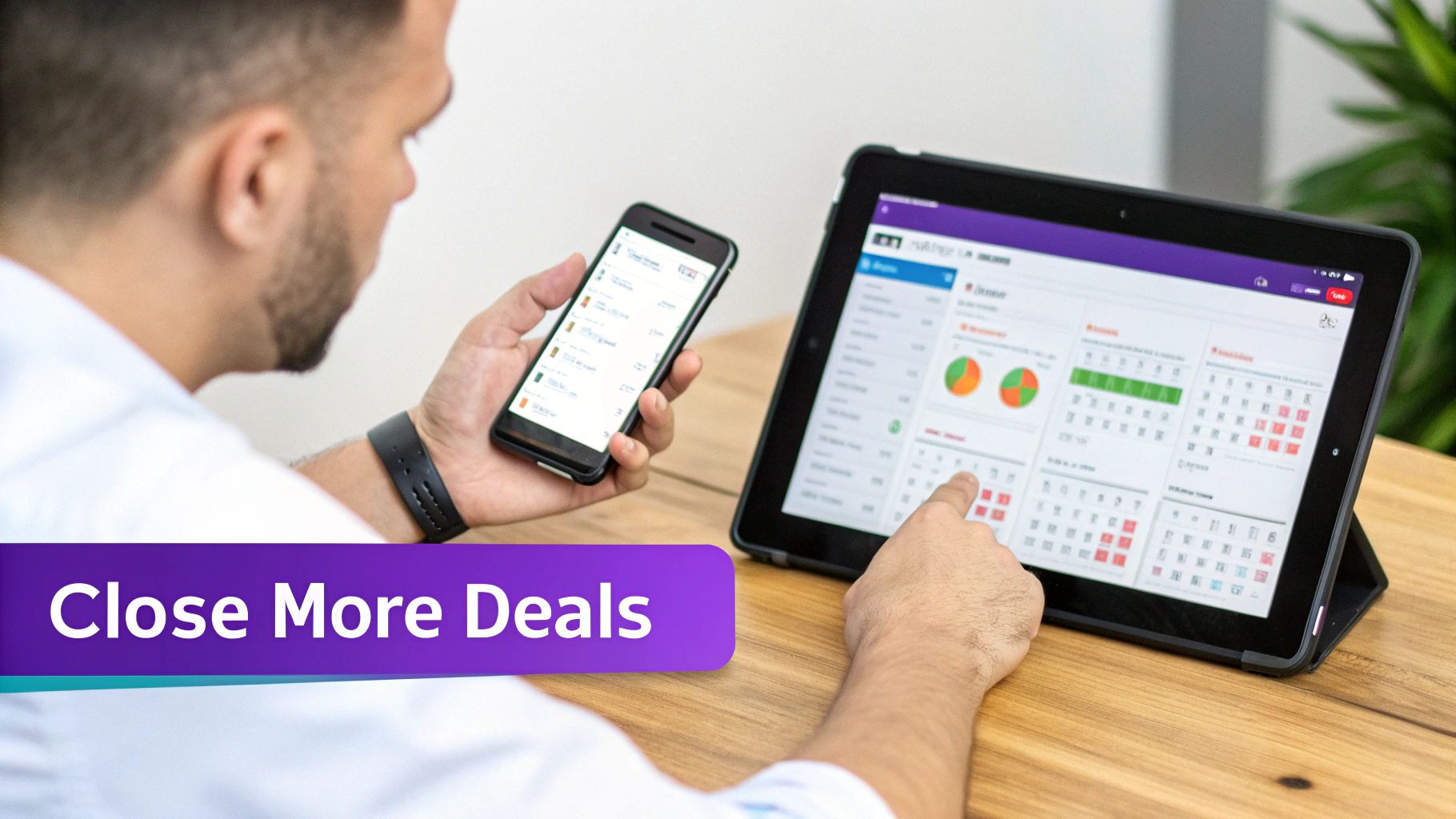
The key to all of this? Speed. The data is clear: leads contacted within the first five minutes are significantly more likely to convert. Every single minute you wait, the odds of that person buying from you plummet. A structured, multi-touch system is your insurance policy against lost opportunities.
This isn't about being pushy. It’s about being present and genuinely helpful. When you combine immediate automated messages with timely personal calls, you start building real rapport and stay top-of-mind while they're making their decision.
Design a Multi-Touch Follow-Up Sequence
A solid follow-up plan has to hit prospects from multiple angles. Not everyone answers their phone on the first try, and plenty of people ignore emails. A blended approach is the only way to reliably generate and convert car sales leads.
Here's a simple, effective sequence you can put into action today:
-
The Instant Response (Within 5 Minutes): The second a lead form hits your system, an automated text and email should fire off. This instantly confirms you got their message and sets the right expectation. Something simple like, "Hi [Name], thanks for your interest in the [Car Model]! This is [Salesperson Name] from [Dealership]. I'm confirming the vehicle is here and will call you in a few minutes to answer any questions. You can see it here: [Link to VDP]" is perfect.
-
The First Personal Call (Within 15-30 Minutes): This isn't a hard sell. The goal here is to build a connection, answer their initial questions, and set the next step. And that next step should always be scheduling a test drive.
-
Day 2 Follow-Up (Email & Text): If you couldn't connect, send another message. This time, add a little value. Try something like: "Hi [Name], just following up. Here’s a link to the CARFAX report for the [Car Model] you were looking at. Let me know if a quick test drive this afternoon works for you."
This kind of structured workflow ensures you're persistent without being annoying. As the market heats up, this efficiency is everything. In the first half of 2025, global car registrations climbed 5% to 37.4 million units, and the full year is projected to hit 91.7 million. To grab your piece of that pie, a disciplined follow-up system is non-negotiable. You can learn more about these 2025 auto industry market trends.
Prioritize Your Hottest Leads with Simple Scoring
Let's be real—not all leads are created equal. The person who downloaded a brochure is in a very different place than the person who just submitted a full credit app. Lead scoring is a straightforward way to help your team focus their time on the prospects who are ready to buy now.
Lead scoring isn't about some complex algorithm. It's just about paying attention to a lead's digital body language and using that info to point your sales team toward the easiest wins.
You can start by simply assigning points to leads based on the actions they take on your website. This creates an instant priority list for your team.
| Action Taken | Points Awarded | Why It Matters |
|---|---|---|
| Submitted Credit Application | +25 | The highest-intent action a buyer can take online. This is a five-alarm fire. |
| Used Trade-In Tool | +15 | Shows they are serious about their budget and making a move soon. |
| Scheduled a Test Drive | +10 | A clear signal they are ready to come in and kick the tires. |
| Viewed VDP 3+ Times | +5 | Indicates strong interest in a specific vehicle on your lot. |
With a system like this, your team can immediately spot the leads most likely to close, making them more efficient and driving more sales. It's that simple.
Your Top Questions About Car Sales Leads Answered
When you're running an independent dealership, figuring out the best way to get—and handle—car sales leads can feel like a moving target. I get asked about this stuff all the time, so let's clear up a few of the most common questions.
What's The Best Channel For Car Sales Leads?
Everyone wants to know the "one best place" to get leads, but the honest answer is there isn't one. The real magic happens when you build a smart mix of different channels.
Think of it like this: your own website, powered by good SEO and a dialed-in Google Business Profile, is your long-term powerhouse. It's fantastic for pulling in local buyers who are actively searching for what you sell. The catch? It takes time to get that momentum going.
For results you can see this week, targeted social media ads are your best friend. Running a campaign on Facebook can put your best inventory right in front of people in your town who match your ideal buyer profile.
A healthy lead pipeline combines both:
- Long-term anchors: Your website and a strong local search presence.
- Quick wins: Paid social ads and listings on busy online marketplaces.
This way, you're not putting all your eggs in one basket. You get a steady stream of car sales leads from multiple places, which makes your business a lot more stable.
How Can A Small Team Manage All These Leads?
This is a huge one. It doesn't matter how many leads you get if you can't follow up with them properly. For a small team, the secret isn't hiring more people—it's working smarter with the right tools and a solid process.
Automation and prioritization are your best friends here.
First, you need a simple way to score your leads. A customer who submits a full credit application is obviously a hotter prospect than someone who just downloaded a PDF of a vehicle's specs. A basic scoring system helps your team instantly see who to call first.
Next, set up automated first-touch responses. An immediate text or email that says "Thanks for your inquiry, we'll be in touch shortly!" works wonders. It acknowledges the customer right away, even if you're out on the lot with another buyer.
A well-known study from the Harvard Business Review found that getting in touch with a new lead within the first hour makes you seven times more likely to have a meaningful conversation. Automation makes this speed possible without burning out your team.
How Do I Measure The ROI Of My Lead Generation Efforts?
You have to know if your marketing dollars are actually working. Don't get lost in a sea of complicated analytics. To start, just focus on two key numbers for every channel you're using: Cost Per Lead (CPL) and Cost Per Acquisition (CPA).
-
Cost Per Lead (CPL): Take the total you spent on a channel (like your monthly Facebook ad budget) and divide it by the number of leads you got from it. This tells you what you paid for each opportunity.
-
Cost Per Acquisition (CPA): Now, take that same ad spend and divide it by the number of cars you actually sold from those leads. This is the bottom line—what it cost you to sell a car.
Tracking just these two numbers will tell you a story. You'll quickly see which channels are bringing you profitable customers and which ones are just wasting your money. It's the difference between guessing and having a real, data-driven strategy.
Ready to turn your website into a lead-generating machine? AutoFire provides independent dealers with modern, mobile-first websites that automatically sync inventory and capture leads from day one. Get started in minutes at https://goautofire.com.