

A great car showroom website is so much more than a digital brochure. It’s a powerful 24/7 sales engine, meticulously built to earn trust and turn casual online browsers into confirmed showroom appointments. It all comes down to a blend of a flawless mobile experience, crystal-clear inventory, and smart search visibility that captures buyers before they even think about visiting your lot.
Your Website Is Your Best Salesperson
I always tell my clients to think of their website as their most valuable, hardest-working employee. It's on the clock 24/7, never calls in sick, and for almost every single customer, it’s the very first handshake. Let's be honest, a car buyer's journey today doesn't start with a drive-by anymore—it starts with a Google search. That first click sets the entire tone for their relationship with your dealership.
A slow, clunky, or confusing site can kill a deal in a heartbeat. If a potential buyer pulls out their phone and can't instantly browse your stock, see clear pricing, or figure out how to contact you, they're gone. They'll just hit the back button and go straight to your competitor. Your website has to be a virtual showroom that's just as clean, organized, and inviting as your physical one.
The Modern Car Buyer Journey
The path a customer takes from a search query to walking through your door is surprisingly direct, and your website is the crucial bridge. It’s a simple, three-step dance.
This process makes one thing perfectly clear: your website is the pivotal point where casual interest becomes a real intention to buy. A well-designed site closes the gap between someone just looking and a qualified lead ready to talk business.
So, how well are most dealerships doing at converting that online traffic into foot traffic? The numbers can be sobering. Industry benchmarks show that typical conversion rates for dealer websites hover between 0.55% and 1.5%. However, a properly optimized site can easily push toward the higher end of that spectrum, effectively doubling your lead volume from the same amount of traffic. If you're curious, you can dig deeper into data on car dealership conversion rates and see just how much performance matters.
To really drive this home, the table below outlines the essential components we've found to be non-negotiable for a high-converting dealership site.
Key Elements of a High-Converting Dealership Website
This table breaks down the non-negotiable components of a modern car dealership website. We highlight why each element is crucial for converting online traffic into real-world sales.
| Core Element | Why It Matters for Your Bottom Line |
|---|---|
| Mobile-First Design | Over 50% of car research starts on a smartphone. If your site is clumsy on mobile, you’re losing half your potential customers before they even see a car. |
| Live Inventory Sync | Nothing frustrates a buyer more than finding their "perfect car" online, only to learn it was sold last week. Real-time updates build trust and prevent wasted trips. |
| High-Quality Photos & Videos | Buyers want to see everything. Multiple high-res photos, 360° views, and walk-around videos build confidence and make your listings stand out. |
| Clear Calls-to-Action (CTAs) | Buttons like "Schedule Test Drive," "Check Availability," and "Get Pre-Approved" need to be prominent and easy to find, guiding users toward the next step. |
| SEO for Vehicle Listings | Appearing in local search and Google Vehicle Ads puts your inventory directly in front of buyers actively searching for what you sell. It’s free, targeted advertising. |
| Fast Page Speed | Every second a page takes to load, you lose visitors. A fast site feels professional and keeps impatient buyers engaged with your inventory. |
These aren't just "nice-to-haves"; they are the fundamental building blocks that separate a website that just exists from one that actively generates leads and sells cars.
Your website isn't just supporting your sales team—it is your sales team. Every single element, from the homepage down to the vehicle details, has to be engineered to get a visitor to do one thing: book a visit or send an inquiry.
This is exactly the problem that platforms like AutoFire were built to solve for independent dealers. They handle all the heavy lifting—the mobile design, the inventory management, the search optimization—so you can stop wrestling with technology and get back to what you do best: selling cars. In today's market, a high-performance website isn't a luxury; it's the engine that drives your entire business forward.
Designing for How Modern Customers Buy Cars

Before you even think about colours, logos, or code, the best car showroom websites start with one critical question: who are we actually building this for? A site that generates leads is built around how real people shop for cars today, anticipating what they need before they even have to look for it. With 95% of car shoppers now turning to digital tools, your website isn't just a brochure—it’s your primary sales floor.
Think about it. The typical car buying journey rarely starts with a specific car. It begins with a broad idea, like "used SUVs under £15k," and gets more specific from there. Your website's entire structure has to follow that same path, guiding visitors from a wide search to a specific vehicle. Make it easy for them to filter, compare, and dig deeper. If the navigation is confusing or the inventory is just one long, messy list, you're putting roadblocks in their way and they'll just bounce to a competitor.
Understanding Your Key Customer Types
Let's make this real. The secret to great design is to stop thinking about "users" and start thinking about people. We do this by creating a few customer personas—imaginary but realistic profiles of your typical buyers. This simple exercise will inform every decision you make, from the homepage layout to the buttons on your vehicle detail pages (VDPs).
Here are a few common ones we see:
- The Budget-Conscious First-Time Buyer: They’re laser-focused on price and probably nervous about financing. Your site needs to greet them with easy-to-find payment calculators, transparent pricing, and straightforward info on how your finance options work.
- The Feature-Focused Family Shopper: They're thinking about safety ratings, boot space, and whether it has ISOFIX points. They need powerful filters that let them get specific, searching for features like "panoramic sunroof" or "Apple CarPlay."
- The Enthusiast Hunting a Specific Model: This person knows exactly what they want, right down to the trim level. They just need a lightning-fast search bar and VDPs loaded with high-res photos, detailed specs, and a vehicle history report to seal the deal.
When you design with these people in mind, you're not just building a website; you're creating a helpful experience. The first-time buyer immediately finds the finance tools they were anxious about, while the family shopper can quickly see which two people carriers have the most luggage space.
A great dealership website doesn't just display cars; it answers questions before they are even asked. It anticipates the user's next move and provides a clear, logical path forward.
Crafting a Natural User Flow
Thinking through these personas naturally leads you to a better site structure. Your navigation needs to be simple and predictable—no weird jargon or dozens of confusing links. Just focus on the main things your customers want to do.
A solid primary navigation bar usually just needs these four things:
- Search Inventory: This is your hero. It should be the most obvious link on the page, taking them straight to your filterable stocklist.
- Financing: A dedicated hub for your payment calculator and a secure application form.
- About Us: Builds trust. This is where you share your story and introduce your team.
- Contact: Simple, clear, and includes your hours, a map, and an easy-to-use contact form.
From that main structure, every single VDP needs clear, unmissable calls-to-action (CTAs). Big, bold buttons like "Check Availability" and "Schedule a Test Drive" should be strategically placed to move the customer from just looking to taking the next step. This kind of thoughtful design is what turns a simple website into your dealership’s most effective salesperson.
Mastering the Mobile-First Showroom Experience
Let's be honest, your real car lot isn't the physical one anymore. It’s the one that fits right in your customer's pocket. This simple truth makes a mobile-first approach to your website design an absolute necessity for survival.
For years, everyone talked about "mobile-responsive," which really just meant your desktop site would awkwardly shrink to fit a smaller screen. That's not good enough today.
True mobile-first design flips that whole process on its head. You start by designing the experience for the smallest screen—the smartphone—and then you scale it up for tablets and desktops. This forces you to focus on what really matters to a car buyer on the go: speed, clarity, and instant access to your cars and contact info.
Why Mobile-First Wins Every Time
Imagine a potential buyer standing on your competitor's lot, or just scrolling through their phone on a lunch break. They need a seamless experience, and they need it now. A mobile-first site gives them exactly that by prioritizing the most important actions.
It ensures the critical features are impossible to miss:
- Large, Easy-to-Tap Buttons: No one wants to struggle with tiny links. Buttons for "View Inventory" or "Call Us" need to be big, bold, and easy to hit.
- Simplified Navigation: Menus are clean and uncluttered. You hide the less important links and push the most critical ones front and center.
- Optimized Images: Vehicle photos have to load fast without eating up a user's mobile data. Show off your inventory without the frustrating lag.
This isn't just a hunch; the data backs it up. We see it all the time in industry forums. A solid 60% of vehicle shoppers use their phones after an initial search, and a massive 61% call dealerships directly from what they find online. For used cars, a good internet lead can have a 39-42% show-to-sale rate, which often smokes other lead sources.
A clunky, slow mobile site is like hanging a "Closed" sign on your digital front door for these high-intent buyers. You can see real-world discussions about dealership conversion rates on DealerRefresh to get a feel for the numbers.
Essential Features for the Mobile Shopper
A great mobile site is about more than just looking good. It's about giving customers the tools they need to take action right now.
One-touch click-to-call buttons are completely non-negotiable. A simple tap should immediately launch a phone call to your sales team. Same goes for map integrations—one tap should open Google Maps or Apple Maps and give them directions to your dealership for a test drive.
Your lead forms have to be built for thumbs, not a keyboard and mouse. Keep them short, with big fields that are easy to fill out in a few seconds.
Your mobile website should be the fastest possible path to a lead. Every single element must be designed to get a shopper from browsing a car to contacting you with the least amount of effort.
Platforms like AutoFire are built from the ground up with this mobile-first philosophy. The system automatically structures everything—your content, your inventory—for a flawless smartphone experience. This ensures you never miss a lead just because your site was too slow or confusing to use.
To really dig into this, check out our guide on why mobile optimization is critical for car dealerships. When you master the mobile experience, you make sure your digital showroom is always open and ready to make a sale, no matter what device a customer is using.
Showcasing Your Inventory and Automating the Heavy Lifting

Let's be honest: your inventory is the real heart of your dealership. Every car on your lot represents a potential sale, but if your website fails to make each one look its absolute best, you're just leaving money on the table.
This is where great car showroom web design gets practical. We need to build Vehicle Detail Pages (VDPs) that do the selling for you. A top-tier VDP is more than just a list of specs; it's a virtual tour that builds trust and gets a buyer excited. If the layout is confusing or key info is missing, they'll be gone in a flash.
Crafting the Perfect Vehicle Detail Page
To turn a casual browser into a serious lead, your VDPs have to be designed for engagement. This means zeroing in on what shoppers actually care about.
It all starts with stunning visuals. You absolutely need multiple, well-lit photos from every conceivable angle. Get close-ups of the interior, the dashboard, the wheels, and any other unique features. Even better? Add a quick walk-around video. Great visuals create an emotional connection and give buyers the confidence to reach out.
Next, write descriptions that sell the experience, not just the car. Don't just list "Bluetooth audio." Talk about how it makes the morning commute fly by. This kind of storytelling helps a customer picture themselves behind the wheel.
Finally, make the essential data impossible to miss. Organize it for quick scanning:
- Price: Displayed prominently and transparently. No games.
- Mileage: Clearly visible right at the top.
- Key Features: A bulleted list of the most desirable options.
- VIN: For the savvy buyers who want to run their own reports.
The Magic of Inventory Automation
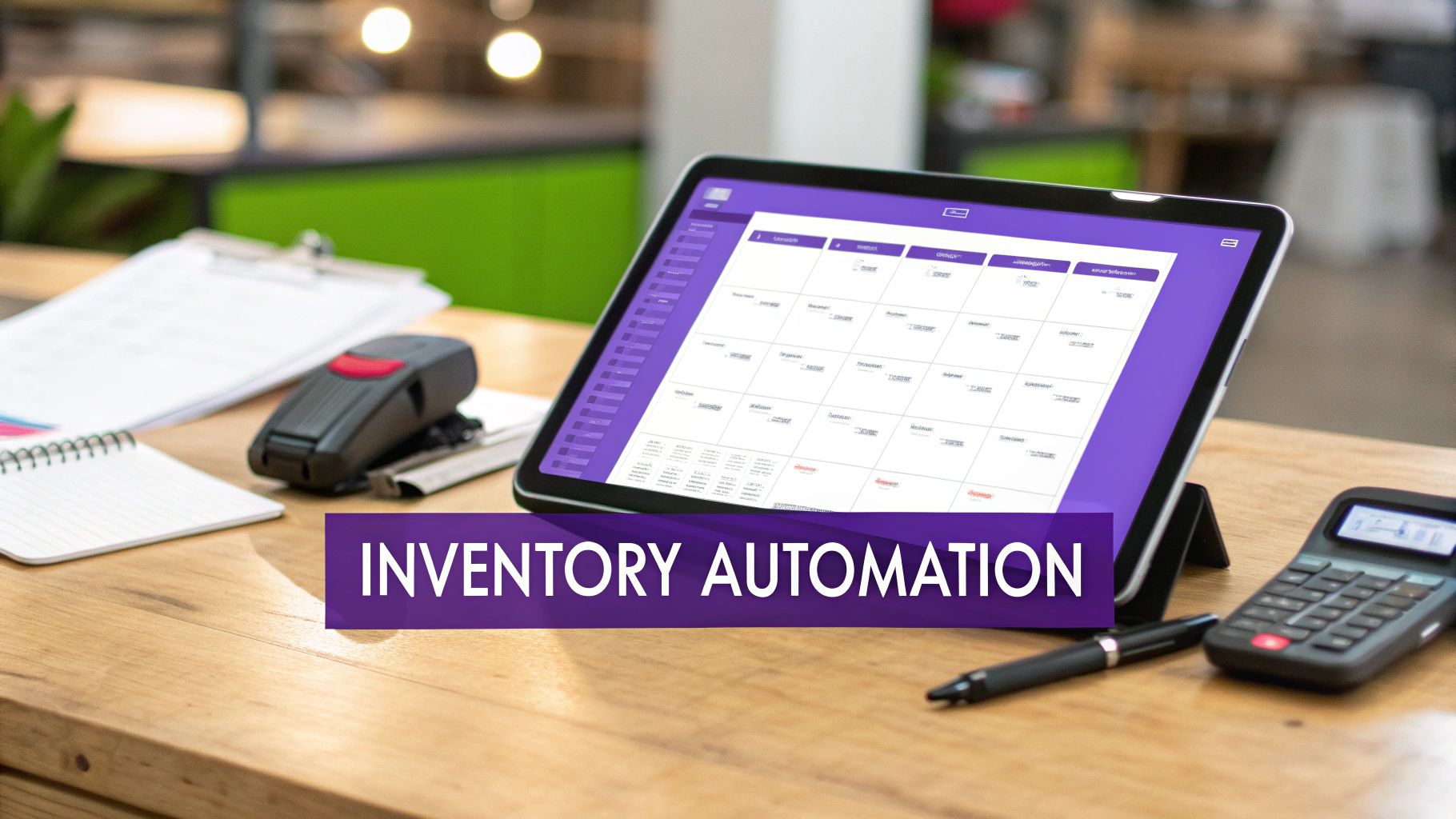
Manually updating every single vehicle on your website is a recipe for a headache. It's a massive time-suck and, worse, it opens the door for huge mistakes, like advertising a car you sold last week. This is where the real game-changer comes in: inventory automation.
A modern dealership website platform should plug right into your Dealership Management Software (DMS). This creates a live, seamless sync. Add a car to your DMS, and it instantly pops up on your website. Sell it, and it's gone. This simple connection eliminates manual data entry and guarantees your online showroom is always 100% accurate.
Automation isn't just a time-saver—it's about protecting your dealership's credibility. An accurate, up-to-the-minute inventory shows customers you're professional, organized, and a business they can trust.
Tools like a built-in VIN decoder take this a step further. Just punch in the VIN, and the system can automatically pull in dozens of features, from engine size to the exact trim package. This not only saves your team hours of work but also prevents the kind of human error that can lead to misrepresenting a vehicle.
If you want to go deeper, we've written a whole guide on mastering online inventory management for independent dealerships. By putting your inventory on autopilot, you free up your team to focus on what they do best: building relationships and selling cars.
Getting Found: Automotive SEO and Google Vehicle Ads
You can have the most stunning car showroom website in the world, but if local buyers can't find it, it's like building a beautiful dealership on a dead-end street. This is where search engine optimization (SEO) comes in. It’s all about making your website pop up when people are actively searching for the exact cars you sell.
For an independent dealership, you're not trying to conquer the world—you're trying to win your own backyard. When someone in your town searches for "used Ford Focus for sale," you need to be one of the first names they see. That fight starts with getting the SEO fundamentals right for every single vehicle on your site.
Optimizing Your Vehicle Pages for Search
Every Vehicle Detail Page (VDP) is another fishing line in the water, a new chance to rank on Google. Treat each one like a dedicated landing page for that specific car. To give it the best shot at getting found, you've got to nail a few key areas.
Start with the basics: keyword-rich titles and descriptions. A generic title like "Ford Focus" won't cut it. Think like a customer and get more descriptive, like "Used 2018 Ford Focus SE in [Your City]."
The meta description—that little blurb under the title in the search results—is your sales pitch. It needs to be compelling enough to earn a click. Try something like, "Low mileage 2018 Ford Focus SE now available in [Your City]. Clean history, great condition. Schedule your test drive today!"
Think of your VDPs as individual magnets for local buyers. Each one you optimize with location-specific keywords and clear details increases your chances of attracting someone in your neighborhood who is ready to buy.
Dominating Local Search Results
Beyond individual car pages, a massive part of automotive SEO is winning at the local level. This means getting your dealership to show up prominently in Google Maps and the "local pack" search results. The cornerstone of this entire strategy is your Google Business Profile (GBP).
Your GBP is a free listing that essentially acts as your digital storefront on Google. It is absolutely critical to claim it and fill it out completely.
- Be Accurate: Your dealership's name, address, phone number, and hours must be perfectly consistent everywhere online. Any discrepancy can confuse Google and hurt your ranking.
- Show Off: Upload high-quality photos of your lot, your showroom, your team, and of course, your best-looking inventory.
- Get Social Proof: Actively ask your happy customers to leave reviews. Just as importantly, respond to them—the good, the bad, and the ugly.
A well-tended GBP sends strong signals to Google that you're a legitimate, active local business. That's what helps you climb the rankings for those all-important "car dealerships near me" searches. For a deeper look at this, our guide on SEO for automotive dealerships unpacks more of these local strategies.
Supercharge Visibility with Google Vehicle Ads
Here’s the game-changer for independent dealers: Google Vehicle Ads. This is a free program that puts your used car inventory directly into Google's search results—complete with a picture, price, mileage, and your dealership's name. It's like getting free billboard space right in front of high-intent buyers the moment they start looking.
But there's a catch. Getting listed isn't as simple as just having a website. Google needs your inventory data structured in a highly specific technical format using what's called schema markup. This special code helps Google's computers understand all the crucial details about each car.
Trying to add this code manually is a nightmare—it's complex, tedious, and easy to mess up. This is exactly why using a purpose-built dealership platform is such a huge advantage. Systems like AutoFire automatically wrap every vehicle you list in the correct schema markup. Your inventory becomes eligible to appear in Google Vehicle Ads without you ever having to touch a single line of code, giving you a serious leg up on the competition.
Making Sure Your Site Is Fast, Secure, and Ready to Go
You’ve nailed the design, your inventory looks fantastic, and your SEO strategy is ready to roll. The last piece of the puzzle is the technical foundation. All the visual flair in the world won't matter if your website is slow, vulnerable to hackers, or riddled with bugs. These details are what separate the amateurs from the pros and are crucial for building trust with impatient mobile buyers.
Let's talk about speed. It has a direct, measurable impact on your sales. Every extra second a customer waits for your vehicle listings to load is another opportunity for them to hit the back button and head straight to a competitor.
Google gets this. That's why page speed is such a heavily weighted ranking factor. Chasing a high score on tools like Google's PageSpeed Insights isn't just about pleasing an algorithm; it’s about delivering a smooth, professional experience that encourages people to stick around and browse.
Protecting Your Customers and Your Dealership's Reputation
Just as critical as speed is security. When someone fills out a finance application or even a simple contact form, they’re handing over sensitive personal information. They’re trusting you with it. The absolute baseline for any modern website is an SSL certificate, which enables HTTPS. This encrypts the connection between a user's browser and your site, scrambling the data so it can't be intercepted.
You know that little padlock icon you see in the browser's address bar? That’s a powerful, instant signal of trust. Without it, most modern browsers will plaster a "Not Secure" warning across your site, which is the digital equivalent of a flashing red light telling potential leads to turn back.
A fast, secure website tells customers you're a professional and trustworthy business. It’s the digital equivalent of a clean, well-lit showroom and a firm handshake. It builds confidence before they even speak to a salesperson.
Your Pre-Launch Checklist
Before you announce your new site to the world, you need to do one last, thorough walkthrough. Catching a mistake now can save you from a costly and embarrassing first impression. Think of it as the final detail before a customer takes a car for a test drive.
Run through this quick checklist:
- Test Every Single Form: Go through and personally fill out your contact form, finance application, and test drive request. Did the notifications come through to the right email or CRM?
- Click Every Link: Navigate your site like a real customer. Click every button, menu item, and link on your vehicle detail pages. Broken links are a dead end that screams unprofessionalism.
- Spot-Check Your Inventory: Pick a few random vehicles. Is the pricing, mileage, and options list accurate? Does it perfectly match what's in your DMS?
- Check on Real Devices: Don't just rely on a desktop preview. Grab an iPhone, find an Android phone, and pull up the site on different web browsers. Make sure it looks and works perfectly everywhere.
This final inspection is your key to launching with complete confidence. Of course, a simpler route is to use a managed platform like AutoFire, which takes care of all the technical headaches—from hosting and security patches to performance tuning—freeing you up to do what you do best: sell cars.
Common Questions We Hear From Dealers
Even with a solid plan in place, building a new website can feel like a big leap. Over the years, a few practical questions almost always come up. Let's tackle them head-on.
The elephant in the room is always cost. How much is this going to set me back? A fully custom website from a traditional agency can easily cost thousands of dollars upfront, not to mention the ongoing maintenance fees. Thankfully, that's not the only way anymore. Modern platforms built for dealerships offer professional, high-converting sites for a simple monthly subscription, some even have free plans to get you off the ground.
How Do I Get My Cars to Show Up in Google Search?
This is a big one. You've seen those vehicle listings that pop up right in Google's search results, and you want your inventory there. To make that happen, your website needs to "speak Google's language" using something called schema markup.
Trying to code this yourself is a massive headache. Honestly, it's not worth the frustration. The simplest, most effective solution is to use a website platform designed specifically for dealerships. These systems handle all the technical heavy lifting for you, automatically formatting your inventory so Google can find and display your cars. No coding required.
If you take away only one thing, let it be this: a seamless mobile-first experience is the most critical element of a modern dealership website. It's not just a feature; it directly impacts your bottom line.
Think about it—over 60% of car shoppers are on their phones while looking for their next vehicle. If your site is a clunky, slow mess on mobile, you're literally turning away customers. A site that’s a joy to use on a phone will always bring in more leads than one that only looks good on a desktop. This isn't about following a trend; it's a fundamental business strategy.
Ready to launch a website that turns browsers into buyers? AutoFire delivers a fast, mobile-first experience with automated inventory sync and built-in SEO to get your cars seen on Google. Get your dealership online in minutes at https://goautofire.com.