Choosing the Right Dealership Website Builder

20 min read
Table of Contents

Think of a dealership website builder as a purpose-built toolkit for creating your online showroom. Unlike a generic tool like Squarespace or Wix, it’s specifically engineered for the unique demands of selling cars, with all the essential features—like inventory management and financing calculators—baked right in.

Your Digital Showroom Needs a Sales Engine

Man interacts with a large digital screen displaying cars in a modern car dealership showroom.

Let’s be real for a moment. Your website is your primary showroom now. The car buying process doesn't start with a customer wandering onto your lot anymore. It starts on a phone, usually late at night, when they finally have a quiet moment to search.

In that context, a generic website is like having an empty lot with the gates locked. Sure, it proves you exist, but it’s not doing anything to welcome people in, answer their questions, or actually help them buy a car. It's a placeholder, not a sales tool.

This is exactly where a specialized dealership website builder completely changes the game.

From Static Page to Active Sales Engine

Imagine your website as your most dedicated salesperson—one that works 24/7 without a coffee break. A platform built for auto dealers doesn't just list cars. It actively works around the clock to find potential buyers, draw them in, and turn them into real, qualified leads for your team to close.

This isn't just a "nice to have"; it's a necessity. Why? Because today's car buyer is online first, period. A staggering number of car shoppers use the internet for their research before they even think about visiting a dealership. They're bouncing between an average of 4.2 websites, so your first impression has to count. You can dive deeper into the data on modern car shopping habits to see just how critical a strong online presence has become.

A great dealership website transforms a simple online listing into a complete digital experience. It answers questions before they're asked, builds trust through transparency, and creates a clear path from browsing to buying.

Connecting with Today's Buyer

To even be in the running, your digital showroom needs the right equipment. A proper dealership website builder lays that foundation by integrating the features that modern buyers don’t just want—they expect. These core pieces work together to make the whole process smooth and intuitive for the customer.

  • Dynamic Inventory Management: New arrivals are showcased instantly with all the specs, a full photo gallery, and clear pricing. Your online inventory is always up-to-date and looks fantastic.
  • Targeted Lead Generation: You can capture serious buyers with built-in tools like trade-in value estimators and pre-approval financing applications.
  • Effortless Customer Engagement: Simple contact forms, click-to-call buttons, and easy-to-use appointment schedulers remove any friction, making it simple for a shopper to take the next step.

When it all comes together, the right platform stops being a business expense and becomes a powerful engine for growth. It solves the fundamental challenge of modern car sales: meeting customers where they are—online—and giving them every reason to choose you.

What Every Dealer's Website Builder Absolutely Needs

Let's be honest, not all website builders are built the same, especially when your business is selling cars. A generic platform might get you a webpage, but a dedicated dealership website builder is what gives you the horsepower to turn online window shoppers into real, qualified buyers. These aren't just flashy extras; they are the core components that power your digital sales engine.

Think of it like this: you wouldn't use a family sedan to tow a flatbed of cars, right? So why would you use a generic, one-size-fits-all tool to run your online showroom? The right platform is built from the ground up for automotive sales, making everything from managing your lot to capturing leads feel effortless and, more importantly, effective.

Dynamic Inventory and Media Management

Your inventory is the heart and soul of your dealership website. A top-tier builder automates the heavy lifting here, saving you a ton of time. You absolutely need a system with automatic VIN decoding. This feature instantly pulls in all the critical details—make, model, year, trim, and specs—eliminating tedious manual entry and the risk of costly errors. It ensures your listings are spot-on from the moment a vehicle hits your digital lot.

Just as critical is how you show off those vehicles. Customers today expect a full virtual tour. Your builder has to support big, crystal-clear photos and walk-around videos that load in a flash. Slow-loading images will send buyers clicking away faster than a zero-down offer brings them in. That high-quality visual proof is often the final nudge a shopper needs to pick up the phone.

A powerful inventory system doesn't just list cars. It showcases them with precision data and immersive visuals, building the trust that convinces a customer to take the next step.

Integrated Lead Generation Tools

Okay, a shopper found the perfect car on your site. Now what? Your website's next job is to make it incredibly simple for them to get in touch. This is where built-in lead generation tools are a game-changer, creating a smooth, frictionless path from "I'm interested" to "Let's talk."

Look for these essential lead-capture features baked right in:

  • Online Finance Applications: Let serious buyers get a head start on financing directly through your website. This hands your sales team a red-hot lead who is not just browsing, but ready to close a deal.
  • Trade-In Estimators: Engage visitors by offering an instant valuation for their current car. It’s a great way to start a conversation and capture contact info from someone actively in the market.
  • Click-to-Call and Live Chat: Give shoppers an immediate way to ask questions. When someone's interest is peaked, you need to be there to connect right then and there, or you risk losing them for good.

These tools shouldn't be a clunky patchwork of different software. A great dealership website builder includes them natively. This combination of sharp inventory presentation and smart lead capture is what transforms your site from a static online brochure into your hardest-working salesperson—one that’s on the clock 24/7, filling your pipeline.

To give you a clearer picture, here’s a breakdown of the features that are non-negotiable versus those that are powerful upgrades.

Essential vs. Optional Website Builder Features

This table compares the absolute must-haves for any competitive dealership website against the advanced features that can give you a serious leg up on the competition.

Feature Description Impact on Sales
VIN Decoding Automatically populates vehicle details from the VIN, ensuring accuracy and saving hours of manual work. High. Builds trust with accurate listings and frees up time for sales-focused activities.
High-Res Media Galleries Supports large, fast-loading photo and video galleries to showcase vehicles from every angle. High. Strong visuals are critical for online shoppers and directly influence their decision to inquire.
Mobile-First Design The website is designed to work flawlessly on smartphones, where most car shoppers start their search. High. A poor mobile experience will turn away over half of your potential customers.
Lead Capture Forms Simple, integrated forms for contact, test drive requests, and trade-in valuations. High. Directly captures buyer interest and provides your sales team with actionable leads.
VDP Live Chat Allows shoppers to chat with a representative directly from the Vehicle Detail Page (VDP). Medium. Provides instant support, increasing engagement and the chance of converting an active browser.
Personalized VDPs Customizes Vehicle Detail Pages with unique payment calculations, videos, or similar vehicle suggestions. Medium. Enhances the user experience, keeping shoppers on your site longer and guiding them to a sale.
CRM Integration Automatically sends website leads and customer data directly into your Customer Relationship Management tool. High. Streamlines follow-up, prevents leads from falling through the cracks, and improves efficiency.

Ultimately, the goal is to build a digital foundation that not only looks great but also works tirelessly to attract and convert customers. You can learn more about how these and other essential dealership features come together to create a powerful sales platform that drives real results. By focusing on these core functions, you ensure your website isn't just an expense—it's your most valuable asset.

How Automotive SEO Drives Qualified Traffic

You can have the most beautiful, feature-packed website in the world, but it’s completely useless if local car shoppers can't find it. Think of your website as your digital showroom. Search Engine Optimization (SEO) is the giant, flashing sign on the highway that points traffic right to your front door. Without that sign, you’re basically invisible.

This is where a specialized dealership website builder gives you a massive competitive edge. These platforms are engineered not just to look good, but to speak Google’s language fluently. They handle the complex, behind-the-scenes work that gets your inventory in front of real buyers the moment they start searching.

The whole goal is to create a seamless journey for the customer, turning your online inventory into real-world leads and sales, as this flowchart shows.

Flowchart illustrating how dealership website essential features showcase inventory, generate leads, and convert to sales.

From showcasing your cars to capturing a lead, every feature should work together to make the sale easier.

The Power of Vehicle Schema Markup

One of the most potent SEO tools in a dealer's arsenal is something called vehicle schema markup. It sounds technical, but the idea is actually pretty simple.

Think about the window sticker on a car sitting on your lot. It has all the key details: year, make, model, VIN, mileage, engine, color, price. Vehicle schema is the digital version of that sticker, but written for search engines.

It's a specific piece of code embedded on your vehicle pages that tells Google, "Hey, this isn't just another webpage; it's a 2019 Ford F-150 with 42,000 miles." This rich, structured data allows Google to pull your cars directly into special search features like Google Vehicle Listings, putting your inventory front-and-center for high-intent shoppers.

A proper dealership website builder automates this entire process. Every time you add a car, it automatically creates and applies the correct schema. This ensures Google always has your most up-to-date and accurate inventory information, without you lifting a finger.

Foundational SEO That Your Builder Must Handle

Beyond just schema, there are several foundational SEO elements that can make or break your online visibility. A generic website builder often leaves this stuff for you to figure out, but a platform built for dealers handles it automatically.

Here are the non-negotiables:

  • Blazing-Fast Page Speed: If your Vehicle Detail Pages (VDPs) take more than a couple of seconds to load, shoppers will click away. It's that simple. Google knows this and ranks faster sites higher. A good builder will optimize images and code so your pages load in a snap.
  • Flawless Mobile Responsiveness: The vast majority of car searches start on a smartphone. Your website has to look and work perfectly on any screen size. If it doesn't, you're not only frustrating potential customers but also getting penalized by Google.
  • Clean URL Structure: SEO-friendly URLs that are easy to read (like yoursite.com/inventory/2021-honda-civic-lx) do more than just look nice. They help both people and search engines understand what the page is about, which directly helps your rankings.

At the end of the day, the right dealership website builder acts as your silent SEO partner. It manages all the technical headaches so you can focus on what you do best—connecting with customers and selling cars. For a deeper dive, check out our complete guide on automotive SEO strategies to help you dominate local search.

Integrating Digital Retailing to Enhance Customer Experience

A woman uses a tablet in a modern car dealership, showcasing digital retailing solutions.

Just getting a name and an email address doesn't cut it anymore. Today's car buyers expect to do more than just look at pictures online; they want to start the actual buying process right on your website. This is what digital retailing is all about—giving people the tools to move themselves down the sales funnel, on their own terms.

A proper dealership website builder bakes these tools right into your Vehicle Detail Pages (VDPs). This isn't about replacing your salespeople. It's about giving them super-powered leads. When a customer has already calculated their payments or gotten pre-qualified, they show up at your dealership more prepared, more confident, and much closer to a "yes."

This change is happening because customers demand it. Forecasts show a huge jump in online car buying, with more and more transactions beginning online. This isn't a surprise. Buyers now expect to see things like payment calculators and financing applications, tools that speed up the sale by cutting down the friction.

From Online Interest to In-Person Sale

The real purpose of digital retailing is to build a smooth, unbroken path from your website to your lot. When you give customers the right tools, you build trust and make the whole process easier, which makes walking into your dealership feel like the natural next step.

Think about how these features change the game for a shopper:

  • Payment Calculators: These let customers play with the numbers—down payment, loan term, interest rate—to see exactly how a car fits into their budget. That kind of transparency creates instant trust.
  • Online Loan Pre-Qualification: By adding a secure finance application, you let serious buyers take a huge step forward. They go from being an anonymous website visitor to a high-intent lead with real buying power.
  • Digital Paperwork Submission: Imagine the time saved—for you and the customer—if they can upload their driver's license or proof of insurance before ever setting foot in your office. It's a massive time-saver.

By empowering customers with self-service tools, you transform your website from a passive vehicle listing site into an active deal-making platform. You’re not just showing cars; you’re starting the sale.

Building a Modern, Customer-First Dealership

In the end, adding these tools does more than just make one sale go faster. It changes how people see your entire business. You're no longer just a place that sells cars; you're a modern, transparent dealership that respects your customers' time and intelligence.

When buyers feel like they're in the driver's seat, they're far more likely to buy from you instead of the competition. They arrive on your lot feeling confident, having already done most of the legwork on your website. This not only makes for a quicker, easier close but also creates the kind of great experience that brings people back and gets you five-star reviews. For a deeper dive, our guide on how to sell cars online walks through more strategies for creating this kind of seamless customer journey.

Common Mistakes to Avoid When Choosing a Platform

Picking the right dealership website builder is a huge decision, one that can make or break your online sales. Get it wrong, and you're looking at lost leads, frustrated customers, and marketing dollars disappearing into thin air. To make sure your new site becomes a sales engine, not just a digital brochure, you need to know what pitfalls to watch out for.

This isn't just about picking a template you like; it’s about choosing a genuine business partner for the long haul. Let's walk through the most common slip-ups dealers make so you can avoid them completely.

Choosing a Generic Platform

This is, without a doubt, the biggest mistake a dealer can make. You see a slick ad for a generic builder like Wix or Squarespace and think, "Hey, I can build a site myself and save some money." While those platforms are fantastic for a local bakery or a photographer's portfolio, they are absolutely not built for the unique demands of selling cars.

They simply don't have the specialized tools you rely on every single day. For instance, a generic builder won’t have VIN decoding built-in. That means you're stuck manually entering every single feature for every car—a mind-numbing task that’s begging for mistakes. You also won't get a proper inventory management system, so keeping your online listings synced with what's actually on your lot becomes a nightmare. Before you know it, you’re advertising sold cars, which is a surefire way to kill a customer's trust before they even step foot on your lot.

Overlooking Poor Mobile Performance

Picture this: a potential buyer is scrolling through their phone on their lunch break. They land on your site, but the VDPs take forever to load, the images are wonky, and trying to fill out a form is just painful. They'll be gone in ten seconds flat. You just lost a sale and you don't even know it.

The vast majority of car shopping begins on a smartphone these days. If your site is slow or clumsy on mobile, you might as well be invisible. It's not enough for your website to just "work" on a phone; it needs a true mobile-first design that's fast and easy to navigate. Plus, Google heavily favors mobile-friendly sites in search rankings. A bad mobile experience doesn’t just frustrate users—it actively harms your ability to be found online.

Your mobile site isn't a shrunken-down version of your desktop site. For most of your customers, it is your primary showroom. Treat it that way.

Ignoring the Fine Print in Contracts

Another classic trap is getting stuck in a long, complicated contract riddled with hidden fees. Some website providers will lure you in with a low monthly price, only to hit you with surprise charges for things you thought were included—like data migration, extra features, or even getting a real person on the phone for support.

Before you sign anything, demand a crystal-clear, itemized list of every single cost. What are the setup fees? What does the monthly payment really cover? What costs extra?

Look for a dealership website builder with transparent pricing. A company that’s confident in its product doesn’t need to lock you into an ironclad, multi-year contract. The best partners earn your business every month by delivering results, not by trapping you with legalese. Asking the tough questions upfront will save you from major headaches and unexpected bills later on.

Your Action Plan for Launching a High-Performing Website

You've got the insights and you know the pitfalls to avoid. Now, it's time to build. Getting a high-performing website off the ground isn't about flipping a switch; it's about following a clear roadmap that turns your digital vision into a lead-generating machine. This action plan will walk you through everything from initial planning to a successful launch.

Think of it like getting a car ready for the showroom floor. You wouldn't just park it out front and hope for the best, right? You detail it, check the engine, and make sure every last feature shines. Your website launch deserves that same meticulous attention to detail.

Define Your Dealership Needs

Before you even start looking at providers, you need to look inward. What are your specific goals? Are you trying to get more online financing applications? Do you want to generate more trade-in leads? Or is it simply about showcasing your unique inventory in a more compelling way?

Make a list of your "must-have" features versus the "nice-to-have" upgrades. This simple exercise creates a scorecard you can use to evaluate every dealership website builder objectively. It helps you find a true partner that solves your real business problems, not just a vendor pushing a one-size-fits-all product.

Vet Providers and Ask the Right Questions

With your needs clearly defined, you can start shortlisting potential partners. Don't just skim their marketing slicks—dig into the specific details that will actually impact your long-term success.

Here’s a checklist of critical questions to ask any potential provider:

  • SEO Capabilities: How do you automatically handle Google Vehicle Listings and all the necessary schema markup?
  • Data Migration: What does the process look like for moving my current inventory data, and are there any hidden fees?
  • Ongoing Support: What kind of support do you offer? Is it email-only, or can I get a real person on the phone when something urgent comes up?
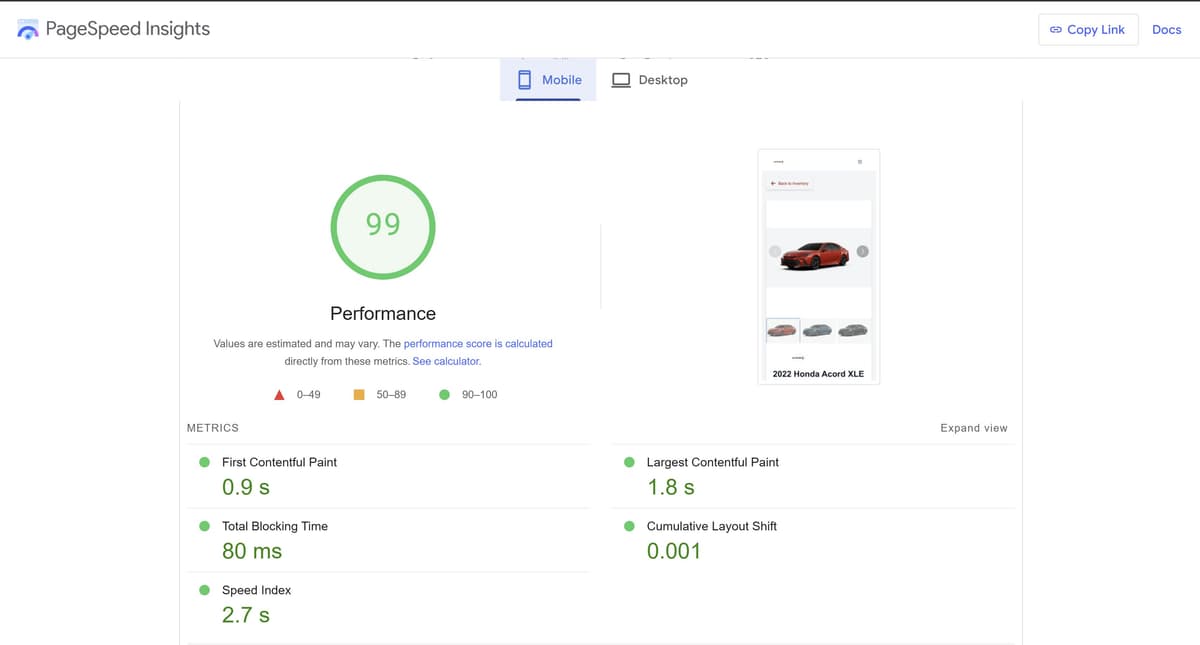
  • Mobile Performance: Can you show me live examples of your clients' sites and their mobile PageSpeed scores?

Remember, most of your organic traffic is coming from smartphones these days, so a fast, responsive design isn’t a bonus—it’s a requirement. Slow, clunky sites are just giving away leads. After all, today’s shoppers average 4.2 site visits during their research, and they spend a significant amount of that time on a mobile device. You can learn more about how the top website providers for car dealerships tackle these challenges.

Finding the right partner is less about a flashy features list and more about genuine alignment. You want a provider whose success is directly tied to your growth—one who offers the support and expertise to help you get there.

Prepare for a Smooth Launch

Once you’ve picked your provider, the final piece of the puzzle is preparation. Start gathering high-quality photos and videos for your key inventory and your "About Us" page. Make sure your inventory data feed is clean and up-to-date to avoid any errors during the migration.

Finally, outline your launch-day strategy. Plan on how you'll announce the new site on your social media channels and to your email list. Taking these steps will ensure your new website starts delivering a measurable return on your investment from day one.

Got Questions? We've Got Answers.

Jumping into a new website platform can bring up a few questions. It's totally normal. Here are some of the most common things we hear from dealers who are thinking about making a change, along with some straight-to-the-point answers.

What's the Typical Price Tag on a Dealership Website Builder?

Honestly, the cost can be all over the map. For an independent dealer, a solid platform usually starts in the ballpark of a few hundred dollars a month. If you're looking at enterprise-level systems with all the digital retailing bells and whistles, you can expect a much bigger investment, but that comes with a whole different level of features and hands-on support.

How Much of a Headache Is It to Switch My Inventory Feed?

It’s way easier than you probably think. Any good dealership website builder is built to play nice with the major inventory management systems out there. The whole point is to make the data transfer smooth and quick, so you can get your cars online without a lot of technical fuss.

How Long Until My New Website Is Actually Up and Running?

You can typically expect to be live within one to four weeks. The exact timing really depends on what you need. A more complex design or custom content will take a bit longer, as will any delays in getting your inventory feed and business details over to the provider.


Ready to launch a website that works as hard as you do? AutoFire delivers a professional, mobile-first site in minutes, designed to get your inventory found on Google and convert shoppers into leads. Explore our features and see how easy it is to upgrade your digital showroom.

About AutoFire

AutoFire helps independent car dealerships create professional websites and manage their online presence. Get your dealership online in minutes with our easy-to-use platform.

Start Your Free Trial