


When you boil it all down, selling cars online comes down to three things: creating digital listings people can trust, genuinely connecting with them, and making the final paperwork as painless as possible. Think of it as building a digital showroom that mirrors your physical lot, putting every vehicle you have right at a buyer's fingertips, no matter where they are.
This guide is your complete playbook for getting it right.
Your Dealership's Shift to the Digital Showroom
Let's face it—the days of customers spending their entire Saturday wandering from lot to lot are pretty much over. The modern car buying journey starts with a search on a phone, tablet, or laptop. For an independent dealer, this isn't a problem to be solved; it's your single biggest opportunity to punch above your weight and compete with anyone.
Making this shift is about more than just throwing up a basic website. It’s about rethinking how you present your inventory, market your dealership, and ultimately, close the deal. The goal is to build a seamless bridge that takes a customer from their initial online search all the way to a signed deal, whether they finish the purchase from their couch or come down to your lot to get the keys.
The New Reality of Automotive Retail
The amount of money changing hands online for vehicles is staggering. The global online car buying market is on track to hit a massive $722.79 billion by 2030. This explosion is fueled by one thing: customers want convenience and straight answers.
In fact, almost 39% of car dealers worldwide are already set up to let customers handle the entire purchase online, and that number is only going up. You can dig deeper into these automotive retail trends to see just how fast the market is moving.
This guide is your practical roadmap. We're cutting through the noise to give you actionable steps you can put into practice today to get your piece of this growing digital pie.
To give you a bird's-eye view, here's a quick rundown of the main stages you'll need to master.
Key Stages of Selling a Car Online
| Stage | Key Objective |
|---|---|
| List | Create detailed, high-quality digital listings for every vehicle. |
| Engage | Capture leads and build trust with potential buyers through timely communication. |
| Sell | Guide the customer through pricing, financing, and final purchase decisions. |
| Deliver | Handle paperwork, secure payment, and arrange for vehicle pickup or delivery. |
Getting each of these stages right is what separates a frustrating online effort from a profitable one.
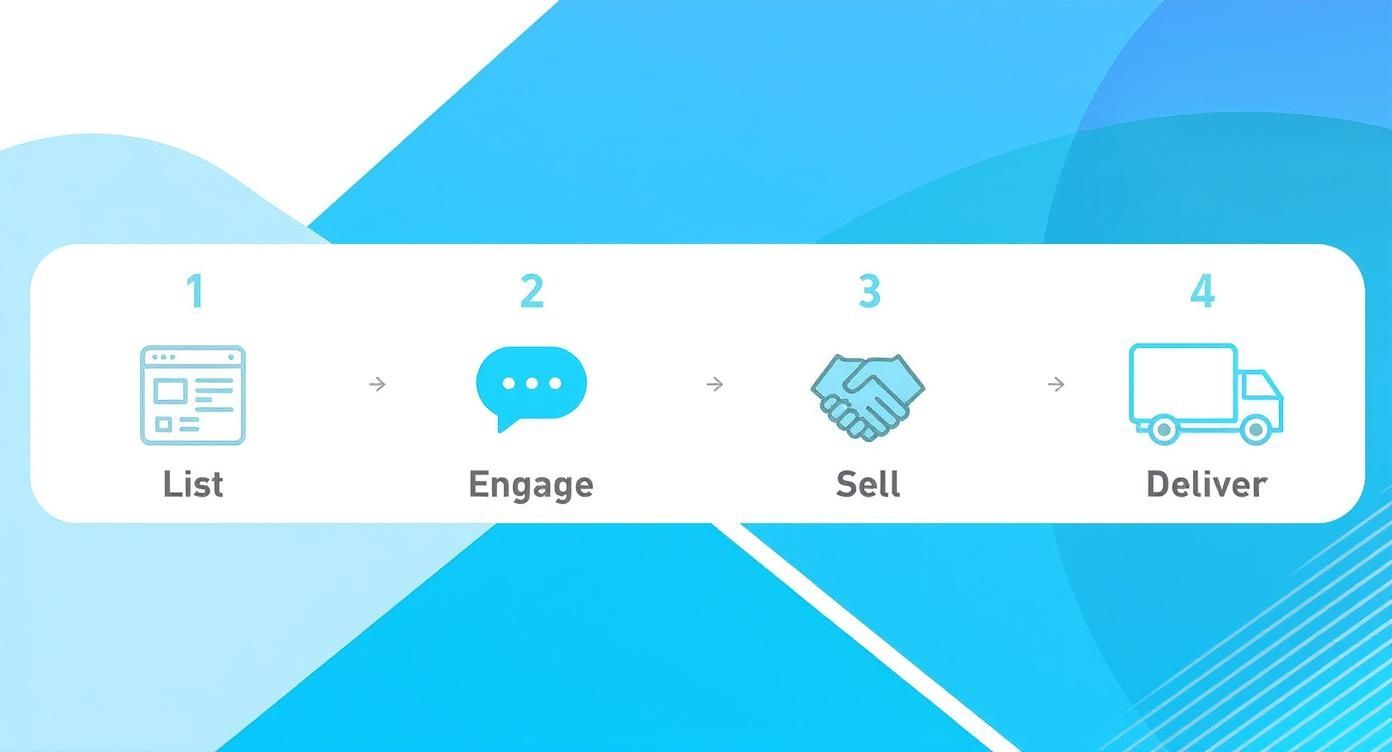
Each phase—List, Engage, Sell, and Deliver—is a chance to build confidence and move a buyer forward. It’s also where a sale can fall apart if you're not prepared.
Your Playbook for Selling Cars Online
To really succeed, your dealership needs a solid game plan that covers the entire online sales journey. We've built this guide as a step-by-step playbook, keeping the realities of small teams and independent lots in mind.
Here’s what we’ll cover:
- Prepping Your Inventory: How to create photos and descriptions that actually sell cars.
- Listing and Pricing: Mastering your own dealer website and the big third-party marketplaces.
- Lead Nurturing: Practical tips for turning casual online interest into appointments and closed deals.
- Finalizing the Deal: Handling digital paperwork, payments, and delivery without the headaches.
By focusing on these key areas, you'll build an online sales engine that works for you, complementing your physical lot and driving real growth for your business.
Building an Online Inventory That Sells Itself
Think of your online listing as your new showroom floor. It’s the very first—and sometimes only—chance you get to make a solid impression. This is where you go beyond just posting a few pictures and start building Vehicle Detail Pages (VDPs) that actually do the selling for you.
When a customer can't walk your lot in person, your digital inventory has to do all the heavy lifting. It needs to build trust, answer questions before they're even asked, and get a buyer excited enough to pick up the phone. A great listing makes your phone ring; a bad one gets scrolled past in seconds.
Taking Car Photos That Actually Work
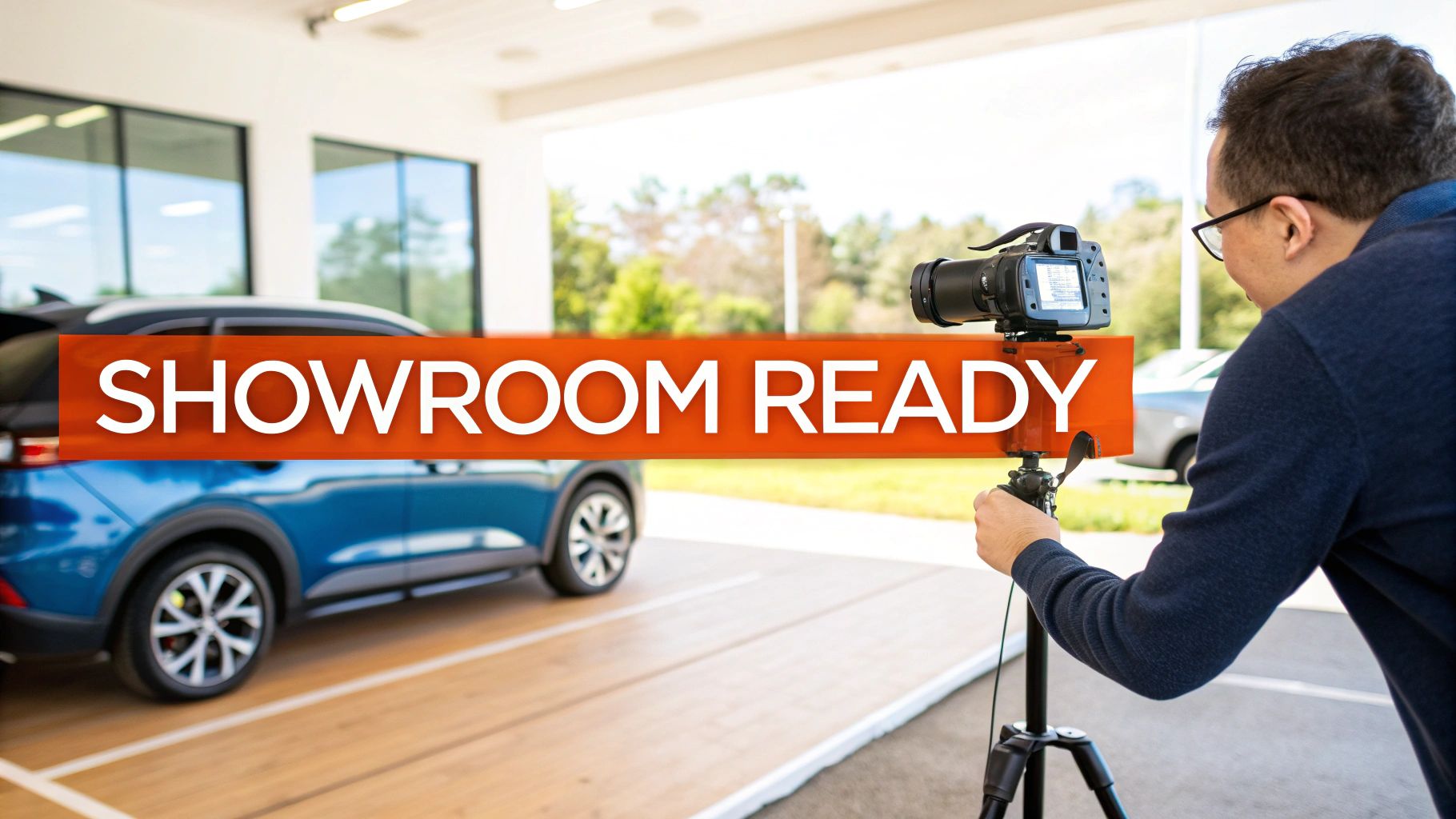
Good news: you don't need a high-dollar photo studio to take pictures that move metal. What you do need is a consistent process and an eye for what your buyers are looking for. Your smartphone is more than capable, but it’s how you use it that makes all the difference.
We tell every dealer to create a "photo recipe"—a standard list of shots you take for every single vehicle. This isn’t just about looking professional; it ensures you never miss a critical angle and gives your entire online inventory a clean, uniform look.
Your shot list should always cover:
- The Full Tour: Get the front three-quarter view, the rear three-quarter, a direct side profile, and straight-on shots of the front and back.
- A Look Inside: Show the driver's seat perspective, a clear shot of the dashboard and center console, the front and rear seats, and of course, the trunk space.
- The Details Matter: Zoom in on the odometer showing the mileage, the tires to show tread depth, the infotainment screen, and any special features like a sunroof or premium sound system.
Here's a tip that might seem counterintuitive: don't hide the imperfections. A close-up of a small scratch or a scuff on the bumper builds a massive amount of trust. It shows you're being transparent and helps manage buyer expectations—a crucial step for avoiding headaches later.
Pro Tip: Your best friend for car photography is an overcast day. That soft, indirect light prevents the harsh glares and dark shadows you get from the midday sun, which can easily hide a car's true condition.
Writing Descriptions That Tell a Story
Once the photos grab their attention, the description has to hold it. This is your moment to connect with the buyer and sell them on why this specific car is the right choice for them. The trick is to stop listing features and start telling a story.
A weak description sounds like this: "Used 2018 Honda CR-V, good condition, runs well." It’s boring and unhelpful.
A compelling description, on the other hand, paints a picture: "This one-owner 2018 Honda CR-V is the perfect reliable SUV for a growing family. With its all-wheel-drive system, you'll have peace of mind in any weather, and the spacious cargo area has plenty of room for sports gear and groceries. We have all the service records, and it's been meticulously maintained."
See the difference? The second example speaks directly to a potential buyer's needs. It turns a list of specs into a solution for their life.
The Non-Negotiable Power of VIN Decoding
Let’s be honest, manually typing in every single feature for every car is a nightmare. It’s slow, tedious, and a single mistake—like listing the wrong trim level—can kill a buyer's trust instantly. This is why accurate VIN decoding is an absolute must-have in your workflow.
A good VIN decoder automatically fills in the listing with all the correct factory-installed options, from the engine and transmission type to the exact color codes. This doesn't just save a ton of time; it guarantees the accuracy that serious shoppers depend on to compare vehicles.
Most modern dealership website platforms have this built-in. For example, a system with a VIN Decoder and other website features automates this entire process for you. It turns your VDPs from simple classified ads into professional, data-rich sales tools that build confidence from the very first click.
Getting Your Cars Priced and Listed to Sell
https://www.youtube.com/embed/xQWUm_eHjGk
Alright, you’ve got your inventory looking sharp online. Now comes the real challenge: getting those pristine listings in front of people who are ready to buy. A smart strategy here isn't just about throwing your cars up on a few websites. It's about being strategic—placing them on the right digital shelves, with the right price, at just the right time.
Think of it as a two-pronged attack. Your own dealership website is your home turf. It’s where you control the entire experience, build your brand, and capture leads without paying referral fees. But you can't just wait for buyers to find you. You have to go where they are, and that means listing your inventory on the big marketplaces like Cars.com, Autotrader, and even Facebook Marketplace.
Trying to juggle all those listings manually is a nightmare. You’ll end up with mismatched prices, outdated photos, and a massive headache. This is where a good dealership management system, like AutoFire, becomes your best friend. You load your inventory once, and it automatically syncs it across every channel you use. Consistency is key, and this is how you achieve it.
Your Secret Weapon: Google Vehicle Listings
One of the most powerful, and frankly underutilized, tools for independent dealers is Google Vehicle Listings. This isn't just another marketplace—it's a free feature that puts your actual cars directly into Google Search results.
Imagine a local buyer typing "used Honda Civic near me" into Google. Before they even click a link, Google can show them a picture of your Honda Civic, along with the price, mileage, and your dealership's name. That’s prime digital real estate, and it doesn’t cost you a dime in ad spend.
Here’s a glimpse of how your cars can show up, grabbing a buyer's attention right away.
This visual-first approach lets shoppers browse what's available locally without having to jump from site to site. Getting your inventory featured here is a total game-changer for driving high-quality, ready-to-buy traffic straight to your website.
Stop Guessing and Start Pricing with Data
Pricing a used car feels like walking a tightrope. Go too high, and the car collects dust. Go too low, and you're leaving cash on the table. The solution? Get out of the guessing game and let data do the heavy lifting.
This is what we call dynamic pricing. It’s about looking at real-time market data to see exactly what similar vehicles are selling for in your specific area. You need to be looking at:
- What are the other guys charging? Check competitor pricing for the same year, make, model, and trim.
- What’s the market supply like? Are there a hundred similar cars for sale, or just a handful? This affects urgency and value.
- Does the car’s story add value? A clean, one-owner Carfax report can absolutely justify a higher price point.
When you base your prices on hard data, you can confidently explain your numbers to customers and make smart, strategic adjustments to keep your inventory moving.
Make Financing the Easy Part
Let’s be honest: financing is often the biggest hurdle in any car deal. So why wait until the customer is standing on your lot to talk about it?
One of the smartest moves you can make is to integrate a secure online credit application directly onto your vehicle detail pages. It’s a simple addition that completely changes the game.
This one step does so much more than just bring in a lead. It turns a casual looker into a qualified buyer who knows their budget. It gets the toughest part of the negotiation out of the way early and dramatically shortens the time it takes to close a deal.
This whole shift toward handling things online isn't a fad; it's the future. In the U.S., online used car sales are projected to make up 18% of all transactions by 2025—a massive leap from just 9.7% in 2020. You can dig into the numbers yourself over at Statista.com's report on online vehicle sales. This boom is happening for a reason: buyers want the convenience of comparing prices and handling financing from their couch.
By combining clear, data-backed pricing with powerful free tools like Google Vehicle Listings and easy online financing, you’re not just selling cars online. You’re building a modern, efficient, and customer-friendly dealership that will leave the old-school competition in the dust.
Turning Online Interest Into Profitable Sales
An online lead isn't just a name and number—it's the start of a real conversation. And in this business, the speed and quality of your first response can make or break the entire deal.
The moment a potential buyer hits "submit" on your website or a marketplace listing, the clock starts ticking. They're actively shopping, and if you wait hours to respond, they’ve already moved on to the next dealer’s inventory. Your job is to turn that initial spark of digital interest into a real, human connection that leads to a sale.
Building Rapport with Proven Scripts
Let's be real: you need to be fast, but you don't want to sound like a robot. Having a few solid response templates is the key. You can act quickly while still being personal and helpful. The goal is to confirm you have the car they want and immediately ask an open-ended question to get them talking.
Here’s a simple text message script we’ve seen work wonders:
"Hi [Customer Name], this is [Your Name] from [Dealership Name]. Thanks for your interest in the [Year/Make/Model]! It’s a great car, and yes, it's still available. What's the most important thing you're looking for in your next vehicle? Feel free to text me back here with any questions."
This little script does a few powerful things. It's personal, confirms the car is there (which is often their first question), and pivots the conversation to their needs. It opens the door for a real dialogue, not just a yes/no exchange.
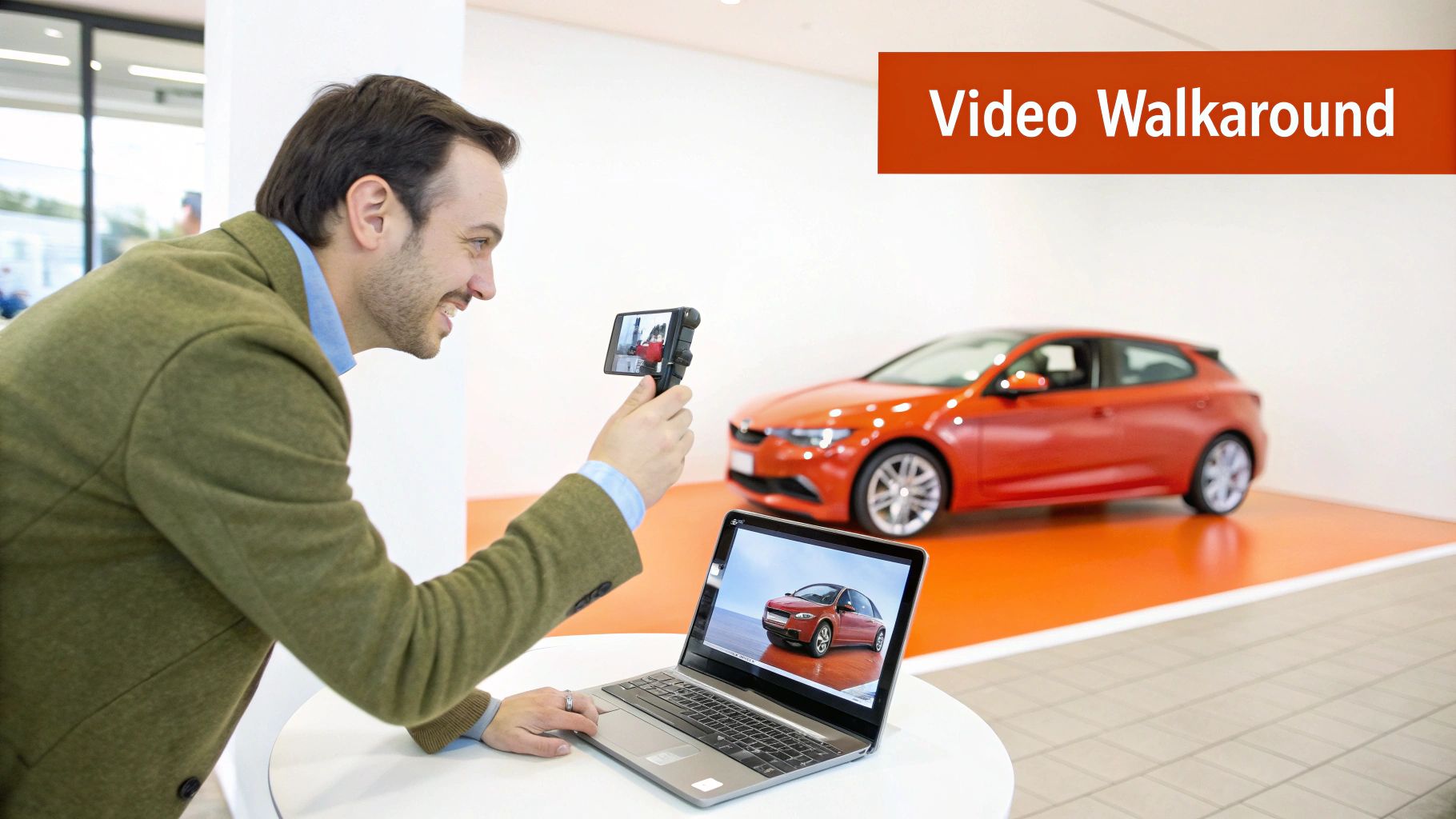
Master the Personalized Video Walkaround
If you want to build serious trust, especially with out-of-town buyers, the personalized video walkaround is your secret weapon. It’s probably the single most effective tool you have.
When a lead comes in on a specific vehicle, don't just email back more photos. Grab your phone, walk out to the lot, and record a quick, two-minute video just for them.
Start it off personally: "Hey, [Customer Name], it's [Your Name] at the dealership. Here's that [Year/Make/Model] you asked about."
Then, hit these key points in your video:
- A Cold Start: Nothing builds confidence like hearing that engine turn over cleanly.
- Feature Tour: Show off the things they'd care about—the touchscreen, the condition of the leather, the trunk space.
- Transparency is Key: This is huge. Show them the good and the bad. Point out the deep tire tread, but then zoom in on that little door ding you mentioned in the description.
Making a video just for them shows you're a serious, transparent dealer who is willing to go the extra mile. For an out-of-state buyer, that video can be the one thing that gives them the confidence to say, "Let's do this."
Using a Simple CRM to Track Everything
As leads start rolling in from your website, Facebook, and other marketplaces, you can't rely on memory or sticky notes. It’s a recipe for disaster. This is where a simple Customer Relationship Management (CRM) system becomes your best friend.
You don't need some massive, complicated enterprise software. A lightweight CRM is perfect for a small dealership and helps you:
- Log Every Interaction: Keep a running history of every call, text, and email with each customer.
- Set Follow-Up Reminders: Never again forget to check in with that promising lead who said, "I'll think about it."
- Understand Your Pipeline: See at a glance who's a new lead, who you're actively talking to, and who is ready to buy.
A good CRM ensures no opportunity falls through the cracks. For a small team juggling everything, it’s not a luxury; it’s your command center for managing every customer relationship effectively.
By combining lightning-fast responses, personal touches like video walkarounds, and organized tracking in a CRM, you build a system that works. You make every potential buyer feel valued and heard, which is exactly how you turn casual online browsers into profitable sales.
Streamlining the Digital Deal and Delivery
Alright, you’ve got a buyer who said “yes.” This is where the rubber meets the road. The next few steps will either lock in a fantastic customer experience or create a frustrating mess of paperwork and payment anxiety. Getting this last part right—finalizing the sale online—is all about having a secure, clear, and efficient process that keeps the trust you've worked so hard to build.
This is more than just emailing a few scanned documents back and forth. You need a seamless, legally sound, and paperless transaction that makes the buyer feel confident from start to finish. For many people, this is the most nerve-wracking part of buying a car, so making it dead simple is a massive competitive advantage.
From Handshake to E-Signature
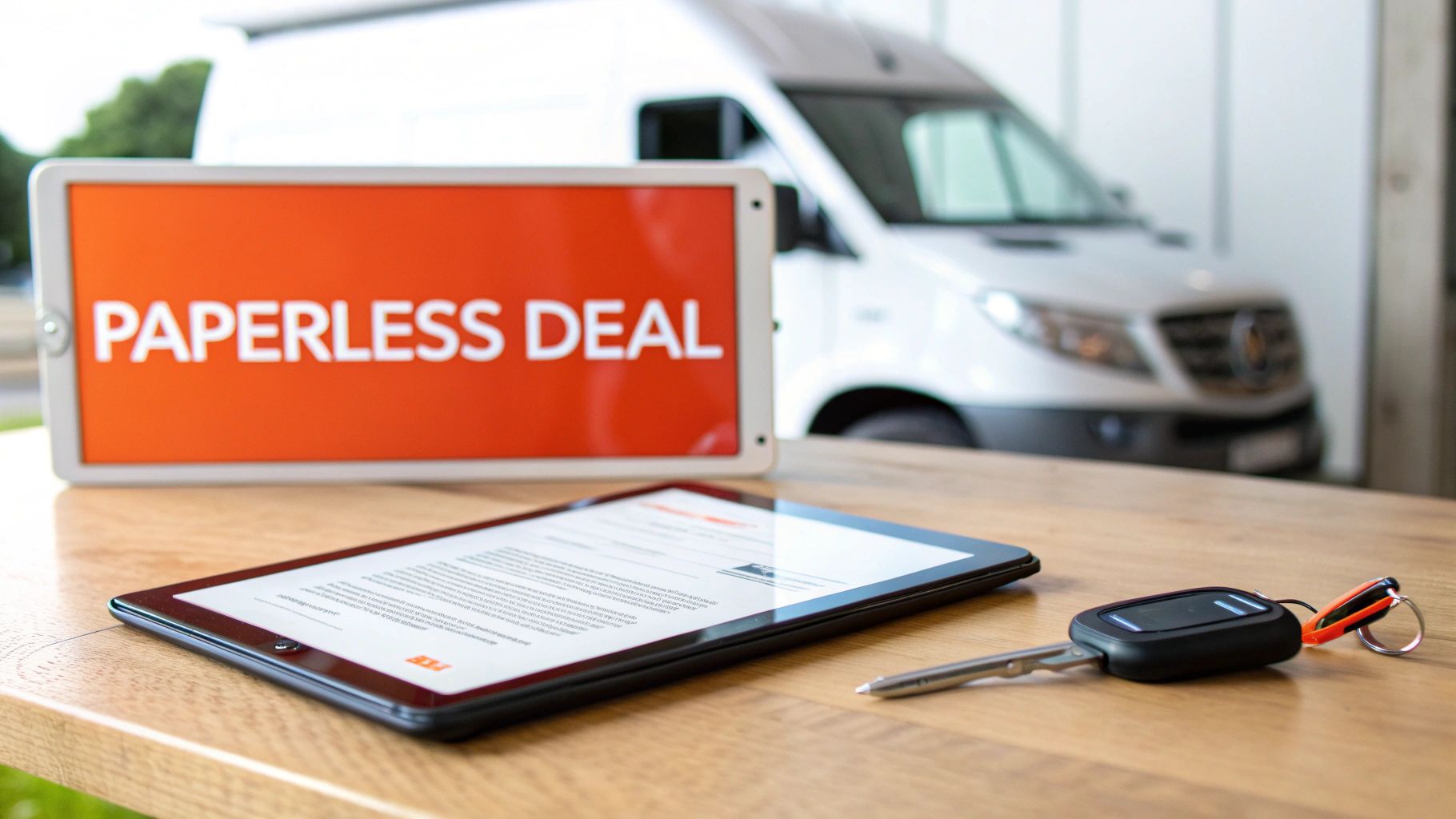
The modern car deal is closed with a click, not just a handshake. E-signature platforms have totally changed the game for independent dealers, letting you finalize sales agreements and finance docs no matter where your buyer is.
These tools let you send legally binding contracts straight to a customer's email. They can review and sign right from their phone or computer, which creates a secure, time-stamped record of the whole transaction. Forget printing, scanning, or overnighting huge packets of paper. This speeds up the closing process dramatically.
That kind of efficiency is a big deal in today’s market. The global car sales industry is a massive market, and according to one global auto sales industry analysis, the sector includes over 471,000 businesses competing for customers. A smooth, fast closing process is a key advantage that smart dealers are using to stand out.
Securing Payments and Building Confidence
Asking someone to send you thousands of dollars for a car they've only seen in pictures requires a ton of trust. Your payment process has to feel professional and buttoned-up to calm their natural fears about buying a vehicle sight-unseen.
A great place to start is with a secure online deposit system. This lets a buyer put down a smaller, refundable amount to hold the vehicle, which gives both of you some peace of mind. When it's time for the full payment, give them clear, easy options:
- Secure Payment Gateway: Use a trusted third-party service that can handle ACH transfers or credit card payments securely.
- Wire Transfer: Provide crystal-clear, double-checked wire instructions for direct bank transfers.
- Financing Payout: Work directly with the lender to make sure the transaction is handled without a hitch.
Pro Tip: Over-communicate during this stage. Send a quick email confirming their deposit was received. Send another when the final payment clears. This constant reassurance is critical for keeping an out-of-state buyer calm and confident in their purchase.
Modern dealership platforms can bring all these final steps into one clean workflow. To see firsthand how a system can connect inventory management, lead tools, and closing processes, you can request a demo of the AutoFire platform.
Coordinating Delivery and the Final Touchpoint
The last step—getting the car into the customer's hands—is your final opportunity to leave a lasting impression. This moment can turn a happy buyer into a superfan who leaves glowing five-star reviews and sends their friends your way.
If the buyer is local, setting up a pickup appointment is simple enough. For nationwide sales, however, you need a solid plan.
- Find Good Shippers: Get to know a few reputable, fully insured auto transport companies. Understand their rates and timelines so you can give customers accurate quotes and ETAs.
- Set Clear Expectations: Be completely transparent about shipping costs and delivery windows. Make sure the customer understands who is responsible for what while the car is in transit.
- Create a "Wow" Moment: Whether it’s a local pickup or a cross-country delivery, make it special. The car should be impeccably detailed with a full tank of gas and a temporary tag ready to go. Even a small touch, like a branded keychain, can make a big impact.
By nailing this final digital handshake and delivery, you're not just closing a deal. You're cementing a relationship and building the kind of reputation that will help you sell more cars online for years to come.
Your Top Online Car Selling Questions, Answered
As you gear up to sell cars online, you’re bound to have some questions. It’s only natural. We hear a lot of the same ones from independent dealers just like you, so we’ve put together some straight-to-the-point answers to help you navigate the process.
Where Should a Small Dealer Focus First?
If you do only one thing, do this: get obsessed with your photos and vehicle descriptions. Seriously. Your online listing is your new showroom. It’s the very first impression a buyer gets, and you only get one shot.
Fancy marketing tools and software are great, but they can't make up for a listing with dark, blurry photos or a one-line description. You don't need a professional camera, either—your smartphone is plenty powerful. What matters is having a solid process.
Come up with a "photo recipe" you follow for every single car. I’m talking 30-50 photos per vehicle, minimum. You need to show it all:
- Every exterior angle: Get the front, back, sides, and those crucial three-quarter views.
- The entire interior: Dashboard, front seats, back seats, trunk space—everything.
- The good, the bad, and the details: Get close-ups of the odometer, the tire tread, and any special features. And—this is huge—don't hide the flaws.
Show that minor scratch on the bumper. Point out the small scuff on the door. That level of honesty builds instant trust and heads off any nasty surprises when the buyer sees the car in person. It’s the secret to a smooth sale and a genuinely happy customer.
What's the Real Cost to Start Selling Cars Online?
The good news is you don’t need a massive bankroll to get started. The costs can be surprisingly lean, especially for a small dealership just dipping a toe in the water. Your main expenses will fall into a few predictable buckets.
Your biggest investment is your website. A professional, modern site with built-in inventory management is non-negotiable and will likely run you $100 to $500 a month. You'll also need a subscription for vehicle history reports from a service like Carfax or AutoCheck to give buyers the peace of mind they demand.
After that, it's all about how much you want to spend on advertising. You can actually start with a budget of zero by using free tools like Google Vehicle Listings and posting to social media marketplaces. Once you see what's working, you can start putting money into paid ads on Facebook or boosting your listings on third-party sites.
A smart starting budget for a small dealership is somewhere in the $300-$800 per month range. This covers your essential tools and leaves a little room to experiment with paid ads to start bringing in traffic.
Do I Need a Special License to Sell Online?
This is a really important one: you need the exact same dealer license to sell cars online as you do to sell them from your physical lot. The internet is just another sales channel; it doesn't let you bypass the rules and regulations of the auto industry.
All the laws around titles, disclosures, taxes, and consumer protection are still 100% in effect. You have to be fully compliant with your state's DMV or regulatory agency. Those rules govern every sale you make, whether it’s in-person or online.
On top of that, you’ll want to use digital contracting tools that comply with state and federal e-signature laws. This ensures your sales agreements are legally binding. If you have any specific questions about local regulations, it’s always smart to talk to a lawyer who knows the auto industry. Our team can also point you toward some helpful resources if you contact us for more information.
How Do I Handle Test Drives for Online Shoppers?
This is probably the most common logistical hurdle we hear about, especially when buyers aren't local. The trick is to be flexible and offer a few different options that make people feel comfortable buying from you.
Here are a few strategies that work really well:
Scheduled On-Lot Drives: This is the easiest one. For local buyers who find you online, just set up a time for them to come by the dealership for a traditional test drive. It makes them feel valued and ensures the car is prepped and ready to go.
Personalized Video Walkarounds: For out-of-towners, a live video call or a custom-recorded walkaround is your best friend. This isn’t a generic marketing video. You’re recording it just for them, using their name, and zooming in on the things they specifically asked about. It builds a ton of trust.
"At-Home" Test Drives: For serious local buyers who are pre-qualified, offering to bring the car to their home or office can be a game-changer. It’s a premium service that busy customers absolutely love.
A Rock-Solid Return Policy: For someone buying from another state, a clear, fair return policy (like a 3-day or 150-mile money-back guarantee) is the ultimate confidence booster. It removes the risk of buying a car sight-unseen and essentially makes the first few days of ownership their test drive.
By mixing and matching these options, you can cater to just about any buyer, no matter where they are. You’re not just selling a car; you’re selling a convenient and trustworthy experience.
Ready to launch a professional, mobile-first dealership website that gets you noticed on Google and turns browsers into buyers? With AutoFire, you can get your inventory online in minutes, not months. Our platform is built for independent dealers who want powerful features like a VIN decoder, Google Vehicle Listings integration, and SEO-optimized pages without any technical headaches. Start selling more cars online today.
Article created using Outrank
